Ramo Pro Cycling · since 1988
My story. The story of Ramo.
People often ask me about Ramo Pro Cycling and how it all began. The easy answer is August 2013, when I opened the doors of the shop. But the real story goes much further back.
It started with a bicycle
It begins in 1988, when I was ten years old and a man came to our school assembly with a simple invitation: anyone interested in cycling should bring a bicycle the following day.
There was just one problem. I didn’t have one. My older brother did.
His bicycle was mainly used for shopping and had a basket and various accessories attached to it. I removed whatever I could to make it look a little more like a racing bike, and the next day I turned up. I had no idea that I had just stepped onto a road that would shape the rest of my life.
From that day, I fell in love with cycling. I went to every meeting, learned as much as I could and, within a few weeks, entered my first race. I finished sixth. That was enough to make me want more.
My coach recognised my determination and encouraged me to work harder. At thirteen, I earned a place on the national team. Suddenly, cycling was no longer something I simply enjoyed. It became my life.
Learning the road
Being part of the national team took me places I had never imagined. I raced across different regions and championships, including Asian, Mediterranean and Eastern European competitions. Along the way, I learned far more than how to ride a bicycle quickly.
I learned about preparation, tactics, teamwork, group riding, individual time trials, mechanics and the technical side of the sport.
More importantly, I learned about discipline. About commitment. About staying with something when it becomes difficult.
Those lessons stayed with me long after my racing days were over. Because eventually, the road changed.

Blast from the past
When cycling stopped
An accident severely damaged my right knee. There were operations, more operations, pain, medication and a long period of uncertainty. Walking became difficult. I limped. Even lifting my children from the ground could be a struggle.
But the hardest part wasn’t only the physical damage. My mind was suffering too.
For years, cycling had given me direction. Suddenly, I couldn’t see where I was going. I felt that my career was finished. I didn’t want to hear about bicycles. I didn’t want to hear about racing. For a while, I didn’t want to hear about much at all.
I was mentally exhausted and completely disconnected from the person I used to be. Looking back now, I understand that the injury affected far more than my knee. It affected my identity.
The person who kept pushing
There was, however, one person who refused to accept that this was the end of my story. My wife.
She has always been a huge part of Ramo Pro Cycling. I often describe her as its core engine because, when I had stopped pushing myself, she kept pushing me.
One day she insisted that I go and collect a bicycle from another area. She told me it was free. I refused. She asked again. I refused again. Eventually, I went — mainly because I wanted her to stop asking.
When I arrived, I discovered the bicycle wasn’t actually free. It was for sale. So I paid for it and brought it home. Then I left it sitting there. For two or three days, I barely looked at it. It was dirty and rusty.
It’s not enough that I’m damaged. Now this poor bicycle is sitting here like this too. At least I can do something for it.
So I did. I ordered parts. I took it apart. I cleaned it. I rebuilt it. Piece by piece, the bicycle came back to life.
And when it was ready, there was only one thing left to do. Ride it.
The ride back
As a former racer, I couldn’t just get on the bicycle in ordinary clothes. I needed the kit. The shoes. The cleats. The helmet. The glasses. The computer. Everything.
Then I went out. My first ride after years away from cycling was around 40–50 kilometres. For someone who had once believed he would never ride properly again, it was enormous.
Something had shifted. I wasn’t just riding a bicycle. I was finding a part of myself again.
And somewhere on that ride, another idea appeared. What if I could share this feeling with other people? What if cycling could be about more than racing? What if people could ride together, discover Cyprus, stop for coffee, enjoy the villages, the scenery and the roads?
That thought eventually became the Giro de Cafe.

On the road again
The five-day journey
When I came home, I told my wife about the ride. Then I told her something else: “I’m going to tour Cyprus in five days.”
She looked at me and asked: “Are you crazy?” I told her: “Absolutely not.”
I set a date and began preparing. Around 2011–2012, I rode around Cyprus in five days. The journey also became an opportunity to support Syria during a difficult and unsettled period there. Friends and family helped make it possible, and I remain deeply grateful to everyone who contributed, supported the idea and travelled part of that road with me.
That journey gave me something I desperately needed: proof. Proof that the accident had changed my life, but it had not finished it.
A shop, a risk and a new life
Not long afterwards, another opportunity appeared almost by accident. I had left my job, and while walking with my wife and children one day, I noticed an empty shop.
I pointed at it. “That’s a great shop. I wonder who owns it?” We went next door and found out. I asked whether it was available. It was. We discussed the price. We agreed. Then I said something that still makes me smile:
I’ll pay you on my first invoice.
The landlord trusted me and gave me two or three months to prepare the premises without rent. And in August 2013, Ramo Pro Cycling opened its doors.
This time, it wasn’t simply an idea. It was a business. A responsibility. A new baby that needed to be nurtured, protected and grown. I had to provide for it. I had to make it work. And I knew I had something to give.

The shop on Protaras Avenue
Turning experience into knowledge
Years of racing had given me a wealth of practical knowledge. I understood the bicycle from the technical side. I understood competition, training, tactics, teamwork, time trials, mechanics, preparation and the realities of life on the road. I could pass all of that on.
But there was a question I couldn’t ignore: was experience enough? My answer was no. Experience is incredibly valuable, but I wanted Ramo to stand on two strong foundations: experience and education.
So I went back to learning. I pursued qualifications, diplomas and professional education in areas including personal training, advanced sports nutrition, sport psychology, sport hypnosis, CBT and life coaching. Some of this learning happened online. Some required travelling, attending courses and sitting examinations.
I wasn’t collecting certificates for the sake of having them. I wanted to understand more. I wanted to connect what I had learned through decades of sport with the science and education behind it.
Eventually, this journey also led me to professional certification through the international cycling federation in Switzerland, and to opportunities to contribute to coaching at World Championship level.
The pieces were finally coming together. This was the beginning of Ramo Coach.
Body & Mind
There was another lesson that my own experience had taught me. A strong body doesn’t automatically mean a strong mind.
I had lived through the physical consequences of injury. But I had also experienced the exhaustion, frustration and loss of direction that can happen mentally.
That changed the way I looked at coaching. Training isn’t simply about making the body stronger. The mind has to come with it. You need clarity. Direction. Purpose. Motivation. Goals. And sometimes, when things become difficult, you need someone beside you saying: “Go. Go. Go.”
That became the foundation of my Body & Mind philosophy. The physical and mental sides of a person should not be treated as separate projects. They belong together.
Finding the swimmer again
Then life surprised me again. Before cycling took over my childhood, I had another sporting love: swimming. When I was around five or six, I used to take part in local swimming competitions.
That little swimmer was still somewhere inside me. So I went looking for him.
I returned to swimming, discovered open-water swimming and began exploring a completely different side of endurance sport. At one point, I had the opportunity to swim alongside an Olympian and a World Champion. That experience was enough to reignite something.
And swimming eventually led me towards triathlon.

Open water, off the east coast
The athlete becomes a triathlete
I began competing in sprint and Olympic-distance triathlons, half Ironman and longer-distance events. Again, I wanted to understand the experience from the inside. Not just as a coach. As an athlete.
There is a difference between reading about fatigue and actually feeling it. Between explaining preparation and experiencing the nerves before a race. Between talking about endurance and discovering what happens when the body has to keep going.
And then there was running. The funny thing is, I used to hate it. Before my accident, I could walk a few hundred metres while pushing the children’s trolley and complain to my wife that my legs were tired. Today, a 5K run feels almost routine, and a training day can involve a long bike ride, a swim and a run.
Life has a strange sense of humour. Sometimes the thing you once hated becomes something you genuinely enjoy.

The half Ironman shirt, 2017
Giving children a different start
Youth development has always had a special place in my heart. Perhaps because I remember being that little boy with the borrowed bicycle.
I know what sport can give a child. Confidence. Friendship. Discipline. Independence. Self-belief.
But I also believe that children need the opportunity to discover sport without immediately carrying the pressure of competition. That is why Ramo Youth Development and the Ramo Kids Club came to life — cycling, swimming, multi-activity, team games, creativity, movement, challenges, competition, and plenty of fun.
Enjoy it first. Then compete. Have fun first. Then compete.
I’ve had parents tell me what they want their son or daughter to do. Sometimes my answer is no. Not because I don’t believe in the child. Quite the opposite. I believe the child should have a voice.
It isn’t about what the parent wants. It is about what the young athlete wants. Let them discover the sport. Let them enjoy it. Let them play. When they are ready for the next step, they will tell us. That is when genuine motivation begins.

A school hall during the course
Teaching children to ride safely
As the youth programme developed, I saw another opportunity. Children should not only know how to ride a bicycle. They should understand how to ride responsibly.
Where to ride. When to ride. How to behave around traffic and other road users. What the rules are. How to stay safe. How to look after themselves and others.
So I created the Ramo Pro Cycling Proficiency Certification. The programme was designed for children from around six years old and teaches the principles, rules, responsibilities and practical skills involved in cycling safely.
We took the programme into schools, including the American Academy, Xenia and Folio, among others. It was encouraging to see schools embrace the idea because we shared the same belief: sport can be education.
A bicycle can teach much more than balance. It can teach responsibility, confidence, awareness, independence and respect.

The proficiency course, on stage
Taking the idea further
But I kept asking myself the same question: what else can I give? The answer was always somewhere further down the road.
Ramo had grown locally. Now I wanted to take the philosophy internationally. I began developing international cooperation with people and organisations who shared the belief that sport can be a powerful tool for education, health, community and personal development.
One of the most memorable experiences was in Saudi Arabia, where, together with His Highness Prince Hussam bin Saud bin Abdulaziz Al Saud, we established a three-month training and education camp in al-Baha.
It brought together training, sport, workshops, education, social activities and community. It wasn’t simply about producing better athletes. It was about helping people understand sport and experience what it can bring into their lives. The response was incredible, and I remain grateful to everyone who contributed to making that experience possible.

al-Baha, Saudi Arabia
Still learning. Still competing.
While all of this was developing, I never stopped being an athlete myself. I continued training and competing in national and international events, including English and British Championships and competitions across different disciplines.
That matters to me. I don’t want to coach from a distance. I want to understand what the athlete feels. The excitement. The pressure. The doubt. The fatigue. The preparation. The disappointment. The satisfaction of achieving something that once seemed impossible.
I believe a coach should never stop being a student.

Racing in Ramo colours
Opening the door to everyone
Eventually, I began thinking about all the people who couldn’t simply walk into the Ramo shop. Someone living in another country. Someone with a busy family life. Someone working long hours. Someone trying to lose weight. Someone trying to gain weight.
A cyclist preparing for a race. Someone who simply wants to enjoy cycling. A swimmer. A non-swimmer. A triathlete. A young athlete. An older athlete. Someone starting from zero. Someone chasing a personal best.
They all have different reasons for being here. That is why Ramo Coach Online developed. The idea is simple:
You tell me where you want to go. You commit to the journey. I help you find the way.
I guide you. I educate you. I challenge you. I support you. But you do the work. And when you achieve your goal, you take the credit. Because it belongs to you.

An evening group ride
I don’t believe in one-size-fits-all
This is probably the simplest way to explain my coaching philosophy: I don’t do generic. I don’t believe people are generic, so I don’t believe their training should be either.
Imagine going to a good tailor. You don’t buy a suit and ask your body to fit it.
The tailor measures you. The suit is made around you. Then the final adjustments are made until everything sits exactly where it should. That’s how I approach coaching.
I want to know the real you. Your work. Your family. Your responsibilities. Your social life. Your available time. Your experience. Your strengths. Your limitations. Your ambitions. And your reason for doing it.
Then I build the plan around that person. You are the starting point. Not the programme.
Sport should fit into your life
I’ve seen people become so focused on a training goal that the rest of their life disappears. Everything becomes about training. Work suffers. Family suffers. Business suffers. Friends disappear. Social life disappears. And eventually, the person becomes mentally exhausted.
Sometimes they make it to the event. They complete the race. They ride the 200 kilometres. They achieve the target. Then it’s over. The bike goes into the garage. The training stops. The motivation disappears.
I don’t believe that’s the best way. The purpose of sport should be to add something to your life. Not take your life away.
You should be able to train and still have your family. Your career. Your business. Your friends. Your social life. Your time.
The goal isn’t simply to survive a six-month programme. The goal is to discover a way of living that you can continue. To make movement something you enjoy. To make training something you look forward to. To make sport part of who you are. A lifestyle.
Your goal is yours
Not everyone wants the same thing. One person may want to win a race. Another simply wants to finish. Someone else may want to enter their first competition. Another person may want to lose weight. Someone may want to climb a mountain. Someone may want to ride 200 kilometres. Someone may simply want to get back on a bicycle after twenty years.
All of those goals matter. Success isn’t always about coming first.
Sometimes finishing last is the biggest victory of your life.
Because your achievement has to be measured against your own starting point. That’s why I don’t believe in generic coaching. One size does not fit all. Your programme should fit your life. Your goal should have meaning to you. And your journey should be something you can enjoy.
If that is how you want to train, the next step is a plan built round your life rather than someone else’s.
What Ramo means to me
When I look at Ramo today, I don’t see just a bicycle shop. I see a journey.
I see the ten-year-old boy with his brother’s bicycle. I see the young rider joining the national team. I see years of racing and everything the road taught me.
I see the accident. The pain. The operations. The years when I thought it was finished.
I see my wife refusing to let me stay down. I see that dirty, rusty bicycle. I see the first ride back. I see the five-day journey around Cyprus. I see the empty shop and the decision to take a chance.
I see Ramo becoming a business. I see the decision to go back to school and learn again. I see Body & Mind. I see the little swimmer coming back. I see triathlon. I see running.
I see the children. The Kids Club. Cycling Proficiency. The schools. The international projects. Saudi Arabia. The athletes. The races. The people who trusted me. The people who encouraged me. And all the people who have walked through the door since that first day.
Every one of them has added something.

Bikes up
And the road continues
I don’t know exactly what Ramo will look like ten years from now. And I’m quite happy about that. Because I don’t think we are supposed to know everything in advance.
There is always something else to learn. Another person to help. Another idea to develop. Another challenge to accept. Another road to explore.
The journey that began with a borrowed bicycle has taken me places I could never have imagined when I was ten years old. It has taken me through victories and disappointments. Through health and injury. Through confidence and doubt. Through education and experience. Through moments when I wanted to stop and moments when I found the strength to keep going.
And perhaps that is what I want people to take from my story. You don’t need to have everything figured out. You don’t need to be the strongest. You don’t need to be the fastest. You don’t even need to know exactly where you’re going.
Sometimes you simply need to take the next step. Then another. And another. Until one day you look back and realise just how far you’ve travelled.
You are part of this story
And if you’re reading this, I want you to know something. You are already part of the Ramo journey.
Maybe you visited the website. Maybe you watched a video. Maybe you followed us on social media. Maybe you liked a post or left a comment. Maybe you sent me a message. Maybe you rented a bike. Maybe you joined one of our rides. Maybe you trained with me. Maybe you trusted me with your child. Maybe you simply told someone about Ramo.
It might seem like a small thing. To me, it isn’t.
Every message. Every conversation. Every rider. Every athlete. Every child. Every family. Every person who has supported what I’m trying to build. You have all contributed to the story. And for that, I am genuinely grateful.

The sunrise group
Thank you
So, from me, Omar — thank you. Thank you for trusting me. Thank you for supporting Ramo. Thank you for riding with me. Thank you for training with me. Thank you for challenging me. Thank you for believing in the idea. And thank you for allowing me to be part of your journey.
Because somewhere along the way, Ramo stopped being only my story. It became a collection of thousands of little stories.
People who started. People who returned. People who achieved something they thought they couldn’t. People who discovered a new sport. Children who found a love for movement. Athletes who found confidence. People who simply found a reason to get moving again.
That is what makes me proud. Not just the bicycles. Not just the races. Not just the qualifications. But the people.
See you on the road
The road isn’t always easy. I know that better than most. Sometimes you fly. Sometimes you struggle. Sometimes you fall. Sometimes you have to stop and rebuild. Sometimes you discover that the road you thought was finished actually has another direction waiting for you.
My road changed many times. But every turn taught me something. And every obstacle gave me another reason to dig deeper.
So if you’re standing at the beginning of your own journey, don’t worry about having all the answers. Find your reason. Find your purpose. Take the first step. We’ll work out the rest along the way.
And if you decide you want someone beside you — I’ll be here.

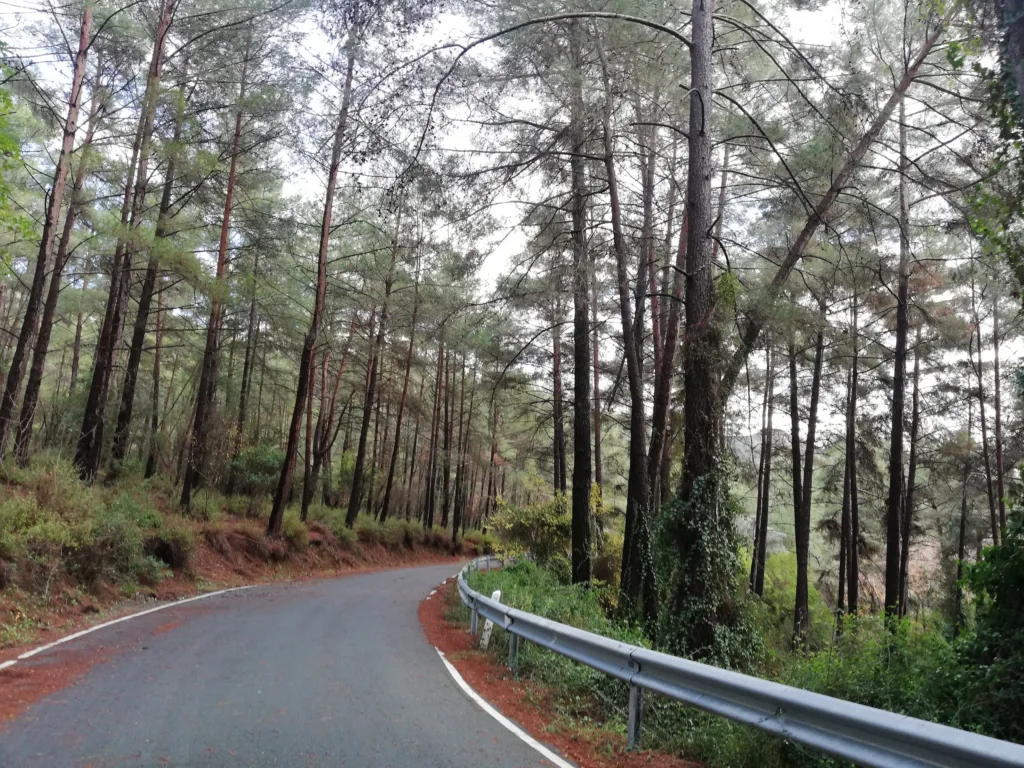
Cyprus, at the end of the day
Never stop moving forward
I’m Omar. This is Ramo. And this is our road.
Body & Mind. Experience & Education.
Your goal. Your journey. Your way.