
Two separate problems get called teaching a child to ride a bike. The first is the afternoon in a car park where they stop needing you to hold the saddle. The second is everything after that: whether they still ride at eleven, whether they can be trusted near traffic, and whether it turns into something they do rather than something they did once.
The first one is easy and there is a lot written about it. The second is the one parents actually ask about, and it is what most of this is about.
Balance first, pedals second
The single most useful change in how children learn to ride in the last twenty years is that we stopped starting with pedals. Balance bikes, or an ordinary bike with the pedals taken off and the saddle dropped so both feet reach the ground flat, teach the hard skill (balancing a moving bicycle) without the child also having to coordinate pedalling and worry about stopping.
Stabilisers do the opposite. They let a child ride without ever balancing, which means the day they come off is the day the learning starts, except now the child is older, higher off the ground and has further to fall. Skipping them is faster, whatever the fashion.
When the child can glide with their feet up for a few seconds at a time, the pedals go back on and the rest usually takes an afternoon.
The order the rest of it comes in
After balancing, there is a sequence, and rushing it is what produces a nine-year-old who can pedal but cannot really ride.
- Stopping. Before anything else, and more of it than feels necessary. A child who is confident stopping will try more.
- Starting on their own, from a standstill, without a push. This is what independence actually is.
- Looking behind without swerving. Harder than it sounds, essential near any traffic, and best practised on grass.
- Riding one-handed, which is what a hand signal requires.
- Controlling the bike slowly. Cones, a slalom, a straight line ridden as slowly as possible. Slow riding is where balance is really tested.
- Only then, roads: quiet ones, with an adult, and not before the five above are boring.
Traffic here, and the thing that catches children out
Cyprus drives on the left. For a child growing up here that is how the world is, and it is not a problem. It becomes one on holiday, and it becomes one for a family that has moved here from mainland Europe, because the instinct about which way to look when crossing or pulling out is built early and does not update easily.
If your family has arrived recently, treat that as a specific thing to practise rather than something the child will pick up. Adults get it wrong here too: riding safely on Cypriot roads is the grown-up version of the same problem.
The other local factor is heat, which affects children faster than it affects adults and which they are worse at noticing. Early morning or evening, water they actually drink rather than water in a bottle on the bike, and a shorter ride than you think. Training through the heat applies to a nine-year-old more than to you.
Getting the bike right
More children give up because of the bike than because of the riding. Three things matter and only one of them costs money.
- Size, not age. A bike bought to be grown into is harder to ride, and a child struggling on a bike that is too big concludes they are bad at cycling.
- Weight. Cheap children’s bikes are heavy, and a heavy bike is a much bigger handicap for a 25 kg rider than for you. This is the one worth spending on.
- Brakes they can actually pull. Small hands, stiff levers. If a child cannot brake hard on their own bike, nothing else on this list matters.
Any workshop can check reach, saddle height and brake reach in a few minutes, and ours does: see the workshop. It is the cheapest thing on this page and it fixes more than it should.
Keeping them riding, which is the real problem
Most children can ride a bike. Far fewer are still riding at thirteen, and the drop-off is not about ability.
What tends to keep them going: other children, a destination rather than a distance, and being allowed to be visibly good at something. What reliably ends it: turning it into a fitness activity, an adult riding at their own pace with the child hanging on behind, and measuring it.
That last one is worth sitting with. A child who is being timed is being assessed, and a child being assessed at nine has a reason to quit at twelve.
What a club adds, and what to ask before joining one
A club adds the two things a parent cannot supply: other children of the same standard, and somebody who is not you giving the instructions. Both matter more than the coaching content at this age.
Before joining any club, anywhere, these are the questions worth asking, and asking directly, rather than looking for the answers on a website:
- Who coaches, what are they qualified in, and who else is present at a session?
- How many children to each adult, and does that change on the road?
- What are the arrangements for supervision, first aid and insurance?
- What happens if my child is much weaker, or much stronger, than the group?
- What is expected of me: am I dropping off, or staying?
Any club worth joining will answer all five without hesitating. We are not answering them here on our own behalf, deliberately: they are a conversation with the person who will actually be coaching your child, not a paragraph on a page.
The youth side here
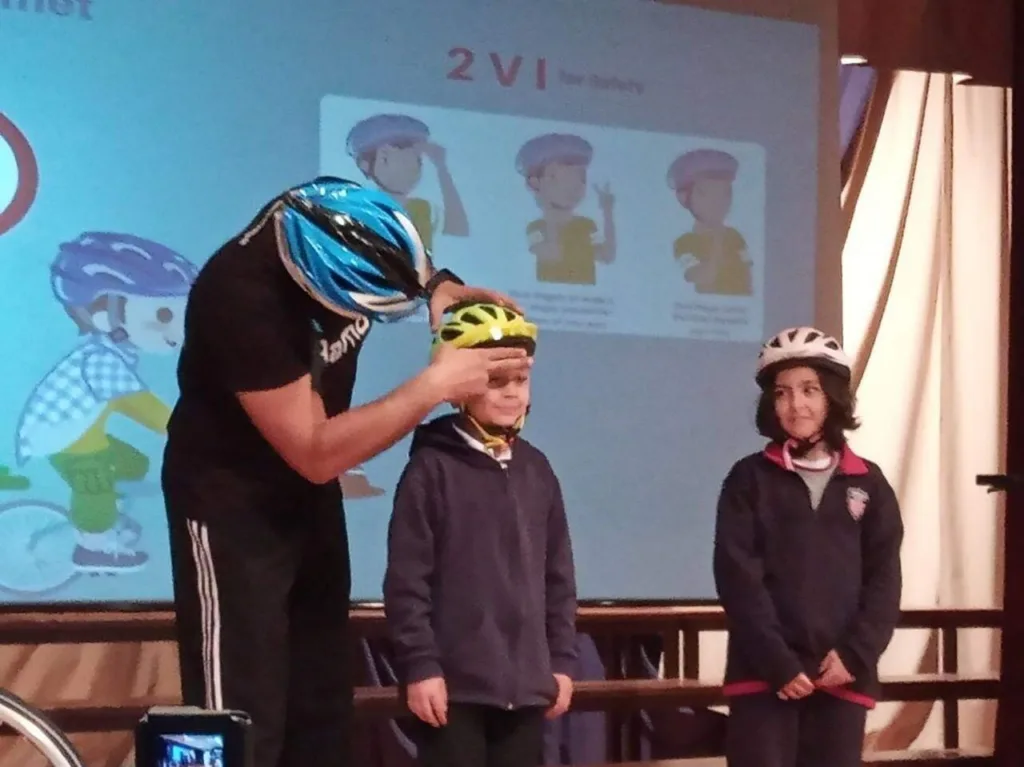
Ramo has coached young riders in Paralimni since 2014: bike handling, swimming and general coordination rather than training, and school sessions on road safety alongside it. Youth cycling is where that lives.
One straight thing, because a page that pretended otherwise would waste your time: the youth offer is being rebuilt at the moment and there is nothing to book online today. If you want to know where it stands or when it restarts, get in touch and ask. That is a real answer rather than a form.
What age can a child start riding?
On a balance bike, far earlier than most people expect: as soon as they can walk confidently and reach the ground sitting down. On pedals, it is about balance rather than birthdays, and children arrive at it across a wide spread of ages. A child who is not ready is not behind.
Is Cyprus a safe place for a child to cycle?
In the right places, yes: quiet village roads, promenades and open ground away from traffic, of which this corner has a lot. Main coastal roads in season are not that, for a child or an adult. The judgement is about the road rather than about the island.
My child is nervous. Should I push?
No, and pushing is the reliable way to turn a temporary nervousness into a settled dislike. Make the bike available, make the sessions short, stop before they want to, and let somebody else be the one asking. That is most of what a coach or a group is for at that age.
Should a young child do strength training?
Structured strength work for children is a real and reasonably well-studied field, and it is also one where the detail matters and where general advice on a website is not much use. It is a question for somebody who has seen your child move. The short version is that it is about coordination and control long before it is about load.