
Most advice about training in the heat is written by people who train in the heat for two weeks a year. This is written from the other end: a coast where the summer lasts from the middle of May to the middle of October, where every serious session for five months of the year starts before seven in the morning, and where the people writing it have no option to wait for it to pass.
The headline is not complicated. You do not train through the heat, you train around it, and the athletes who struggle here are the ones trying to keep a northern European day shape in a Mediterranean summer.
Restructure the day, not the session
The instinct is to keep the same schedule and make the sessions easier. That is backwards, and it costs you the training.
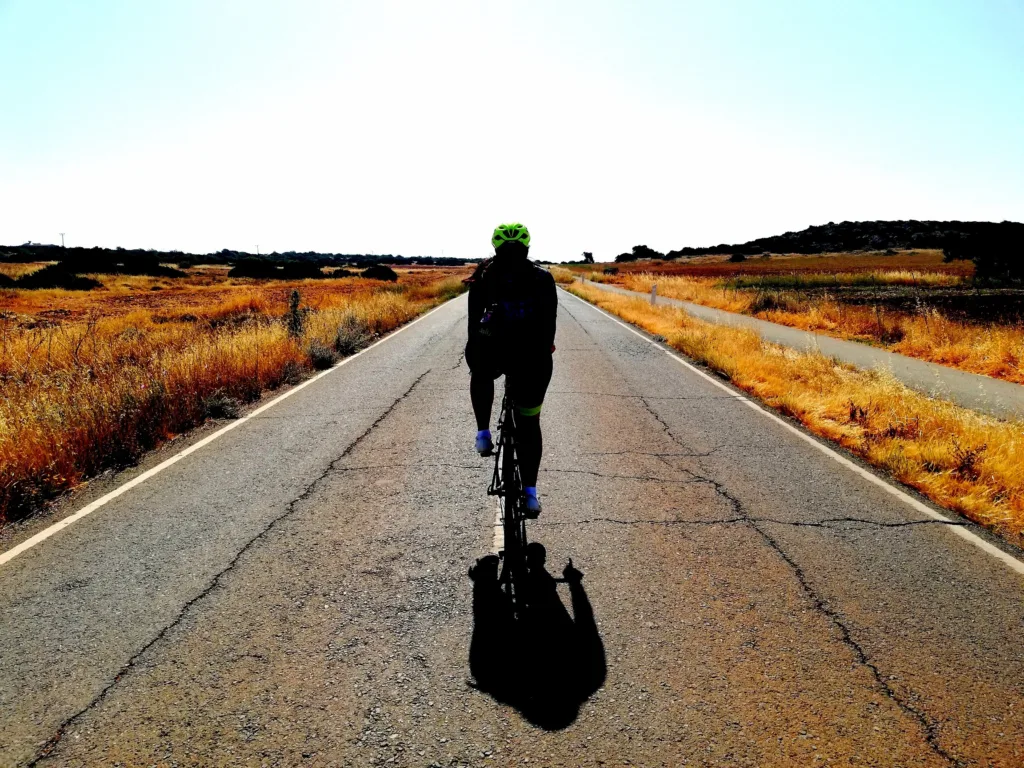
What works is moving the day. Out at first light, the substantial work done before mid-morning, and nothing hard through the middle of the day. Done that way, a summer session here is barely compromised at all. Done the other way (setting off at 10:00 for a four-hour ride, because that is when you ride at home), it is a bad session and occasionally a dangerous one.
That is why the coached sessions here run early enough to look eccentric to a visitor. It is the only time of day the work is worth doing, not discipline for its own sake.
The first week is not a fitness problem
Anybody arriving from a cool climate has the same experience: the first few days feel disproportionately hard, at efforts that were comfortable at home, and it is easy to read that as having lost fitness on the flight.
You have not. Acclimatisation is a real physiological process and it takes roughly one to two weeks to do most of its work. The practical consequences are worth planning around rather than pushing through:
- Arrive earlier than the race or the camp. Three days is doing it on hard mode; a week is a different experience.
- Make the first two or three days deliberately easy. This is the single most common mistake visiting athletes make, and it costs the rest of the week.
- Expect it to pass. It does, and it passes noticeably rather than gradually.
The numbers you should stop trusting
Heat changes the relationship between how hard you are working and what your instruments say, and the effect is large enough to make a well-designed session meaningless if you follow it literally.
Heart rate drifts upward through a session at a constant effort, more and earlier than it does in cool conditions. A rider holding a heart-rate ceiling ends up riding progressively slower for no reason; a rider ignoring it entirely ends up somewhere they did not intend to be.
A power or pace target set in a cool climate is the wrong target here, and coaches who work in hot conditions publish adjustment guidance for exactly this. We are not going to print somebody else’s percentages as though they were ours. The useful part is the direction, which is that the number should come down, and that expecting to match a spring benchmark in August is a way of failing a session that was fine.
Perceived effort becomes the more honest instrument, which is an uncomfortable conclusion for people who bought a power meter. It is not an argument against data; it is an argument for reading it in context.
None of that means testing in summer is pointless. It means a threshold figure carries the conditions it was measured in, and comparing August to March without saying so is how people conclude they have gone backwards.
Drinking, and the part people get wrong
- Two bottles is a floor, not a plan. On anything long, refill stops go into the route before you leave rather than being hoped for.
- Electrolytes, not just water. Several hours of heavy sweating replaced with plain water is its own problem, and it is a worse one than mild dehydration.
- Start the ride already topped up. You cannot catch up mid-session in this climate.
- Drink to a schedule, not to thirst, on the long ones. Thirst lags.
- Light kit, light colours, and something under the helmet. The reflected light off pale rock and sea adds meaningfully to what comes down from above.
- Reapply sunscreen. One application in the morning does not survive three hours of sweating.
What to do with the middle of the day
Nothing, ideally. Where that is not possible (people have jobs), the options in rough order of usefulness are: swim, which is both training and cooling; train indoors and stop treating that as a defeat; or move the session to the evening, which is second best because the ground has been radiating heat all day and it is rarely as cool as it feels.
Swimming deserves the top spot on that list for anyone here in summer. It is the one endurance discipline the heat makes easier to do, and this coast is well set up for it: swimming in the sea here covers the sea, and swimming coaching the coaching side. For the land half, outdoor training is built around the early start rather than working despite it.
If you are coming here to train
The obvious advice, which is nonetheless correct, is to come in the cooler months. The reason the island fills with training camps between January and April is that this is one of the few places in Europe where a serious outdoor block is possible in February. When to come and what the riding is like sets out what each part of the year is actually like, and cycling here in winter the specific case for the cold months.
If you are coming in summer anyway, plan the week around early starts and accept a slightly lower total load than you would target at home. A block built by somebody who trains here is worth more than the same block adjusted from a distance: coaching covers that, and training camps the concentrated version.
Should I train in the heat deliberately?
Heat adaptation is a real practice and it is used by athletes preparing for hot races. It is also easy to do badly and it adds meaningful stress on top of the training, so it belongs in a plan somebody is watching rather than in an experiment you run on yourself. If your target race is hot, it is worth raising with a coach; if it is not, there are cheaper gains elsewhere.
Is it dangerous to train in this heat?
It can be, and the risk is concentrated in a narrow set of circumstances: the middle of the day, no shade, not enough fluid, and an effort chosen before you left. Take those away and summer training here is ordinary. Anybody who feels unwell, stops sweating, or gets confused or dizzy in the heat needs to stop, get cool, and get help. That is a medical situation, not a hard session.
Will I lose fitness over the summer?
Not if the week is restructured rather than abandoned. What usually happens to people who lose fitness over a Mediterranean summer is not the heat; it is that they kept trying to train at eleven in the morning, had a run of bad sessions, and gradually stopped.