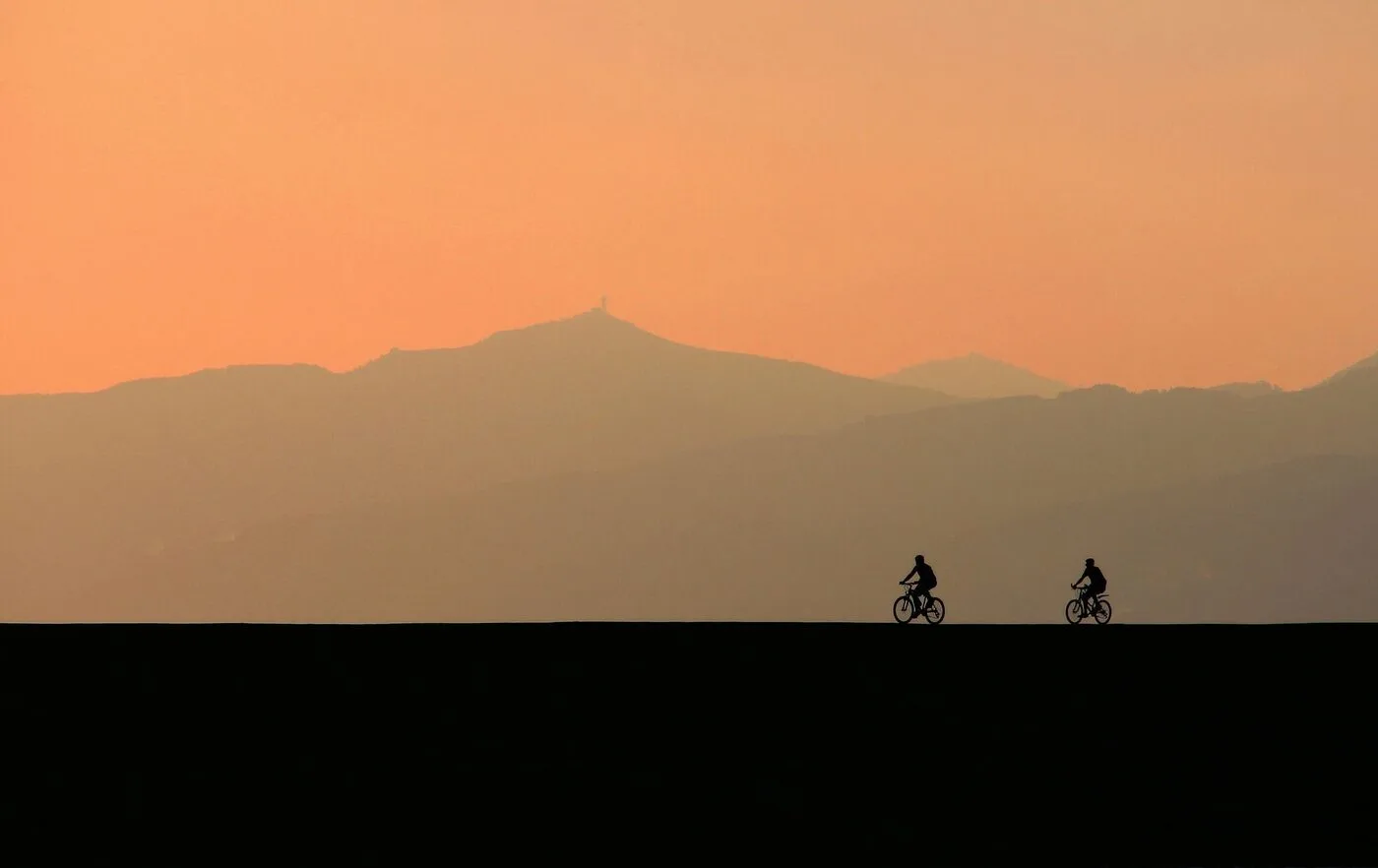
Winter is the season this island is actually best at, and it is the one visitors get wrong in both directions. Some arrive expecting summer and are cold at 08:00. Others write the trip off entirely because December sounds like the wrong month for a cycling holiday, which in most of Europe it is.
Neither is right. What winter here really offers is ordinary riding clothes, empty roads, and days that are long enough to be worth flying for, with a set of specific caveats that nobody tells you until you are already here.
What the temperature actually does
The useful way to think about a Cypriot winter day is as a wide range rather than a number. Coastal mornings are cool enough for long sleeves and sometimes for more than that; the middle of the day is frequently short-sleeve riding; and it drops away again quickly once the sun is low, because the days are short.
The practical consequence is that the hour you start changes the ride more than the date does. A 09:00 start and an 11:00 start in January are different propositions, and the 11:00 one is usually the better ride if you have the choice. That is the exact inverse of the summer rule, and it catches out riders who have been here before in the warm months.
It also means arm warmers and a gilet do more work in a Cypriot winter than a heavy jacket does. You want layers that come off at the first climb and go back on at the top, not one garment sized for the coldest ten minutes of the day.

The rain, and why it is not the problem you expect
Winter is the island’s wet season, and that sounds worse than it rides. The pattern is short, heavy spells rather than the all-day grey drizzle that defines a northern European winter, so the sensible kit is a packable shell that lives in a jersey pocket, not a heavy waterproof that you wear all day.
What the rain does leave behind matters more than the rain itself. Grit, mud and washed gravel end up across the smaller inland roads, particularly on bends and at the bottom of dips, and they can stay there for days after the weather has cleared. On 25mm tyres that is worth close attention on a fast descent.
It is also the argument for having lights on a winter ride even in daylight. A dark, wet road under a low sun is a poor place to be invisible.
The green season
One thing that surprises first-time winter visitors: the landscape is green. The burnt, dry Cyprus of the holiday photographs is a summer phenomenon. In winter the fields inland are planted, the hills carry colour, and by late winter the almond blossom is out.
It changes the character of the riding. The red-soil villages behind the coast look like a different region in February than they do in August, and the inland routes that are a heat-management exercise in summer become the pleasant part of the day.
The mountains are a separate forecast
This is the one that has consequences. There is snow on the high Troodos most winters (there is a ski area on Mount Olympus, which sits at 1,952 metres), and checking your hotel’s forecast tells you nothing useful about conditions up there.
That does not close the mountains to cycling in winter. It does mean a mountain day in January needs a different kit list and a proper look at the forecast for the altitude you intend to reach, not the altitude you are sleeping at. The specific danger is the long descent afterwards in clothing soaked from the effort, not the climb, where you generate plenty of heat.
Everything about riding up there is covered properly in our guide to climbing in the Troodos. The winter-specific version is short: check the mountain forecast, carry more than you think, and treat the descent as the serious part of the day.
Why the roads are empty
The resort season on this coast runs roughly from spring to late autumn. In winter a good deal of the tourist traffic is not there, and the coast road that needs an early start in April to be pleasant is quiet at 11:00 in January.
For a visiting cyclist that is worth as much as the temperature. It is the same tarmac, the same views and the same cafe stops, with a fraction of the cars. Riders who have only been here in the warm months are frequently surprised by how much better the same route is.
Winter as a training block
This is why the professionals come. A block of consistent, rideable weather in the months when your home roads are dark and salted is difficult to buy anywhere in Europe, and Cyprus offers it alongside a useful terrain mix: flat and rolling on the coast, sustained mountain climbing an hour or two away.
The structure most riders end up with is unremarkable and works: consistent volume on the coast, one mountain day if the forecast allows it, and a recovery day that is actually a recovery day rather than a shorter hard ride. Ten days to a fortnight is where a block starts being worth the flights.
If you would rather have that organised for you, our training camps are built around exactly this, and our coaching can shape the block around whatever you are actually training for rather than around the trip.
What to bring that you would not in spring
- Arm and knee warmers, and a gilet. The workhorses of a Cypriot winter. They handle the morning-to-midday swing without committing you to a jacket.
- A packable shell. For the short heavy spells, not for all-day rain.
- Long-finger gloves and a headband. Small, light, and the difference between an unpleasant first hour and a fine one.
- Lights. Short days, wet roads and a low sun. A rear light in daylight is not wasted here in December.
- Something warm and dry for the top of a mountain descent, if a mountain day is in the plan at all.
The rest of the list does not change much from any other season. It is in what to pack.
Is it warm enough to cycle in Cyprus in December?
For most riders, yes, in ordinary long-sleeve kit rather than winter clothing, and comfortably so through the middle of the day on the coast. The qualification is the time of day and the altitude, not the month: an early start and a mountain road are both colder than the forecast for a coastal town suggests.
Does it rain all winter?
No. It is the wet season by Cypriot standards, which is a much lower bar than the phrase implies elsewhere, and the rain tends to come in short spells rather than settling in. Losing a whole day to weather is possible but not the normal shape of a winter week.
Are the bike hire and the tours running in winter?
Yes. This is a year-round business rather than a summer one, which is not true of every rental operation on this coast. That matters more than it sounds: winter is when cyclists actually want to be here, and a good deal of the local trade is closed or aimed at beach hire. Our bike rental in Cyprus and our guided cycling tours both run through the winter, and if you are unsure about conditions for a specific week, get in touch and ask.