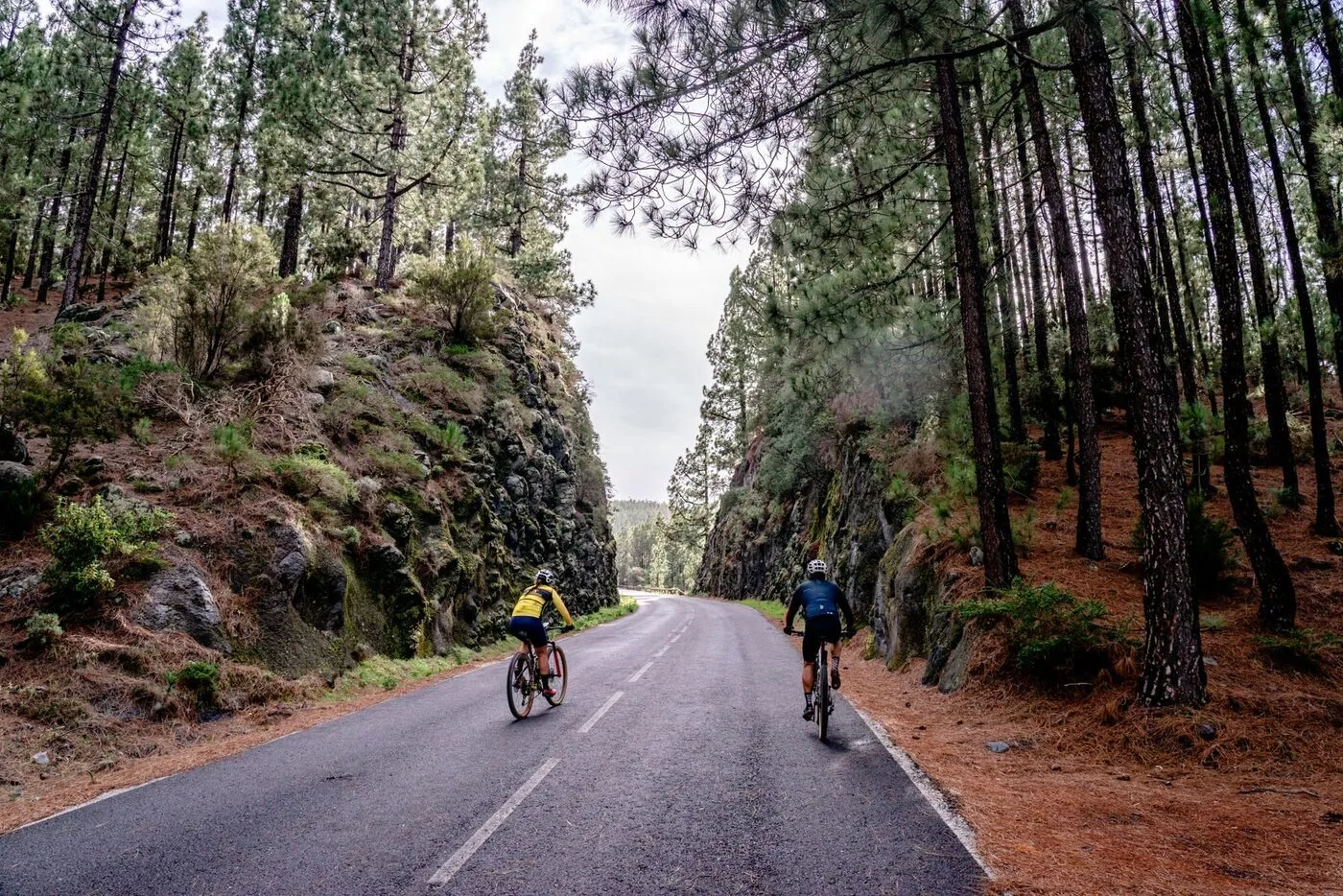
If the eastern corner of Cyprus is the island’s easy riding, the Troodos range in the centre is the opposite, and it is the reason serious cyclists choose Cyprus over a flatter Mediterranean island. The high point, Mount Olympus, stands at 1,952 metres. This is a proper mountain range, not a set of hills with a good view.
It is also the part of a Cyprus cycling trip that most rewards preparation, and the part where being casual about kit and weather has actual consequences.
The scale of it
Climbs in the Troodos are long rather than savage. The character is closer to an Alpine pass than to a short steep hill at home: sustained gradients held over an extended distance, with altitude gain measured in four figures rather than three.
Riders used to rolling terrain consistently find the duration harder to manage than the steepness. A climb that never exceeds a gradient you would shrug at over two kilometres becomes a different problem when it continues for forty minutes or an hour. There is no recovery in it: no descents to spin the legs out, no flat sections to sit up.
That is worth knowing before you go, because the mistake it produces is always the same one: going too hard in the first fifteen minutes because it does not feel hard yet.
Gearing, and why it matters here
The single best preparation for a Troodos day is gearing you are not afraid of. A compact chainset with a wide-range cassette turns the day from survivable into enjoyable, and there is no prize for grinding a big gear up a long climb in the heat.
The reason is cadence rather than pride. On a sustained climb, a gear that forces you below a comfortable cadence loads the legs in a way that accumulates over the hour, and by the time it becomes obvious you are already too deep to recover. Spinning a small gear feels slow and finishes the climb faster.
This is worth specifying when you book a hire bike rather than discovering it at the bottom of the mountain. Bikes from our bike rental in Cyprus can be set up for the gradients if you say what you are planning.
Pacing a long climb
If you have not ridden climbs of this length before, the approach that works is unglamorous:
- Start slower than feels right. The first ten minutes should feel almost easy. If they feel appropriate, you are going too hard.
- Ride your own pace, not the group’s. Regroup at the top. A long climb is the least useful place to try to hold a wheel.
- Eat before you are hungry and drink before you are thirsty. Both are far harder to correct on a climb than to prevent.
- Break it into sections: the next village, the next bend, the next kilometre. An hour of climbing is much easier to manage as six ten-minute efforts.
- Stay seated more than you think. Standing is expensive; save it for the steep pitches and for stretching your back.
The weather is not the coast's weather
This is the most common and the most consequential mistake visitors make. It can be shorts-and-jersey weather at sea level and cold at altitude on the same morning, and the difference grows the higher you go.
In winter there is snow on the tops (there is a ski area up there), and even in spring or autumn, a long descent off the mountain in kit soaked with climbing sweat is a serious cold exposure. You climb slowly, generating heat; you descend fast, generating none, in wet clothing, with wind chill.
Carry a packable jacket regardless of how warm the start was. It weighs almost nothing and it is the one piece of kit riders most regret leaving behind. Arm warmers and a gilet cover most of the rest. Check the mountain forecast rather than your hotel’s. They are different places, and the difference is not a rounding error. The full list is in our guide to what to pack.
The descent
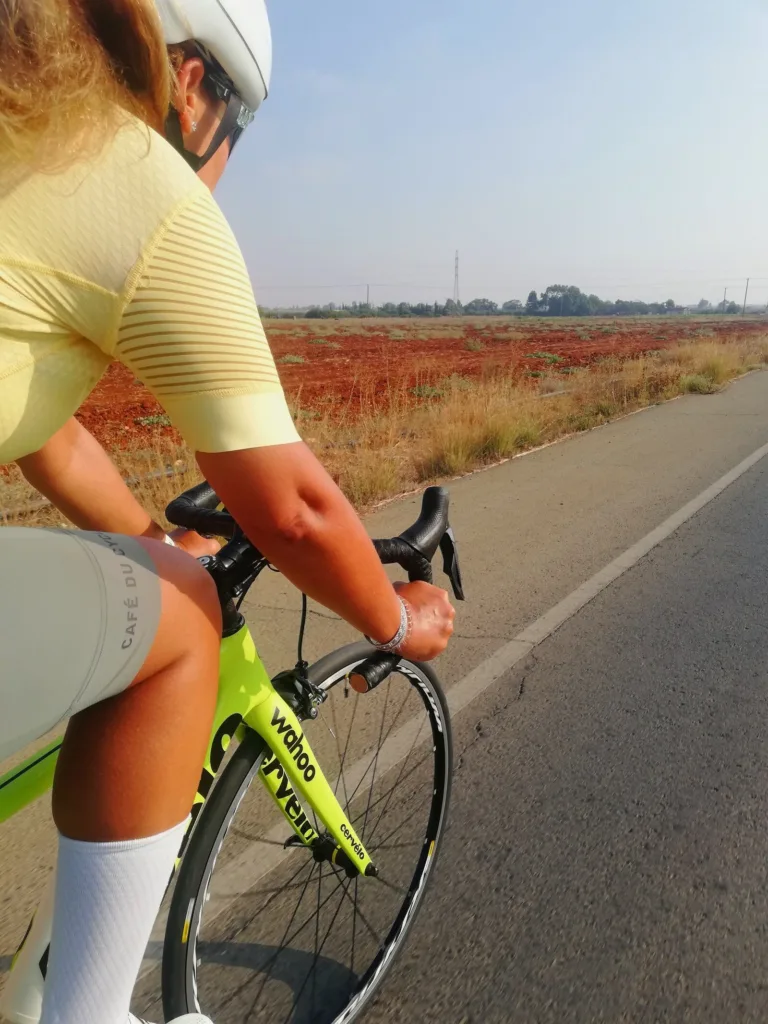
The descents here are long, and long descents ask different things of a rider than short ones.
- Brakes. Have them checked before the day rather than during it. Sustained braking generates real heat, and worn pads that are fine around town are not fine on a twenty-minute descent.
- Brake in pulses, not continuously, to let things cool, and set your speed before the corner rather than in it.
- Layer up at the top, before you are cold. Once you are cold at speed you stay cold.
- Watch for grit and gravel washed onto the road at bends, particularly after rain.
If you are riding your own bike and it has travelled in a box, a brake check before a 1,900-metre descent is not excessive caution. Our workshop can look at it.
Fitting it into an east-coast trip
The mountains are not next door to Protaras, and that is the practical problem. Riding there and back turns a mountain day into an expedition and spends most of the effort on transit rather than on the interesting part.
The usual answer is to drive out, ride in the mountains, and drive back. That is how our own Troodos day works: an early start by car, arriving in the mountains mid-morning, riding there, and a traditional lunch as part of the day. The transport up and back is part of what you book. Five to six hours on the bike, and a full day out.
This is also the one argument the western resorts have that the east does not: they are closer to the mountains. Whether that should decide where you stay is a bigger question than it first looks, and we have taken it seriously in where to base yourself.
Put it in the middle of the week rather than at the start. You want to be acclimatised and you want fresh legs, and the day after is naturally an easy one. It is one of our guided cycling tours if you would rather not organise the logistics yourself.
How fit do I need to be?
Fitter than for the coastal riding, and honest with yourself about it. The climbing is sustained and the descents are tiring in their own right: concentration, cold and braking add up. If your regular rides at home are an hour on rolling terrain, a full mountain day is a significant step up.
That said, pacing matters more than fitness. A moderately fit rider who starts slowly and eats properly will have a far better day than a stronger rider who attacks the first climb.
Is there really snow?
On the high ground in winter, yes, most years. There is a ski area on Mount Olympus. It does not mean the mountains are closed to cycling in winter, but it does mean the forecast and the altitude you are planning to reach both matter, and that a winter mountain day needs more kit than a coastal one.
Can I do it on a hire bike?
Yes, and most visitors do. The thing to get right is the gearing, so say what you are planning when you book rather than taking whatever is standard. Mention the mountain day and it can be set up for it.