
Swimrun is the youngest of the endurance sports and the easiest to explain: you run a bit, you swim a bit, you run a bit more, and you do all of it in the same kit without stopping to change. There are no transitions because there is nothing to transition into.
There is a swimrun in Cyprus and it is held in Protaras, under the auspices of the Cyprus Triathlon Federation, over several distances from a short relay up to a long course. It is on our doorstep, and there is almost nothing written anywhere about how to prepare for it, which is the gap this is trying to fill.
What makes it different from triathlon
People assume it is triathlon minus the bike. It is not, and the differences are the whole sport.
- You swim in your shoes. That is the single strangest adjustment and the one worth rehearsing early, because it changes your kick, your body position and how much your legs cost you.
- You run wet. Wet shoes, wet clothing, a wetsuit if the event and the water call for one. Comfort problems that never appear in ten minutes appear reliably at two hours.
- There are many swims, not one. Getting your heart rate under control in the first fifty metres of a swim is a skill you practise once in a triathlon and repeatedly in a swimrun.
- The running is rarely flat and rarely smooth. It is coastline (rock, path and trail rather than road), so it is closer to trail running than to a ten-kilometre road race.
- Many formats are raced in pairs. Where that applies, you race together the whole way, which makes pacing a negotiation rather than a decision.
Kit varies by event and by distance, and the rules that matter (what you must carry, whether pairs are tethered, what is permitted in the water) are the organiser’s to state and not ours. Read their rules before you buy anything.
The sessions that actually prepare you
Fitness in each discipline separately is necessary and not sufficient. Competent runners and competent swimmers both have bad first swimruns, and they have them for the same reason: the transitions between the two are the event.
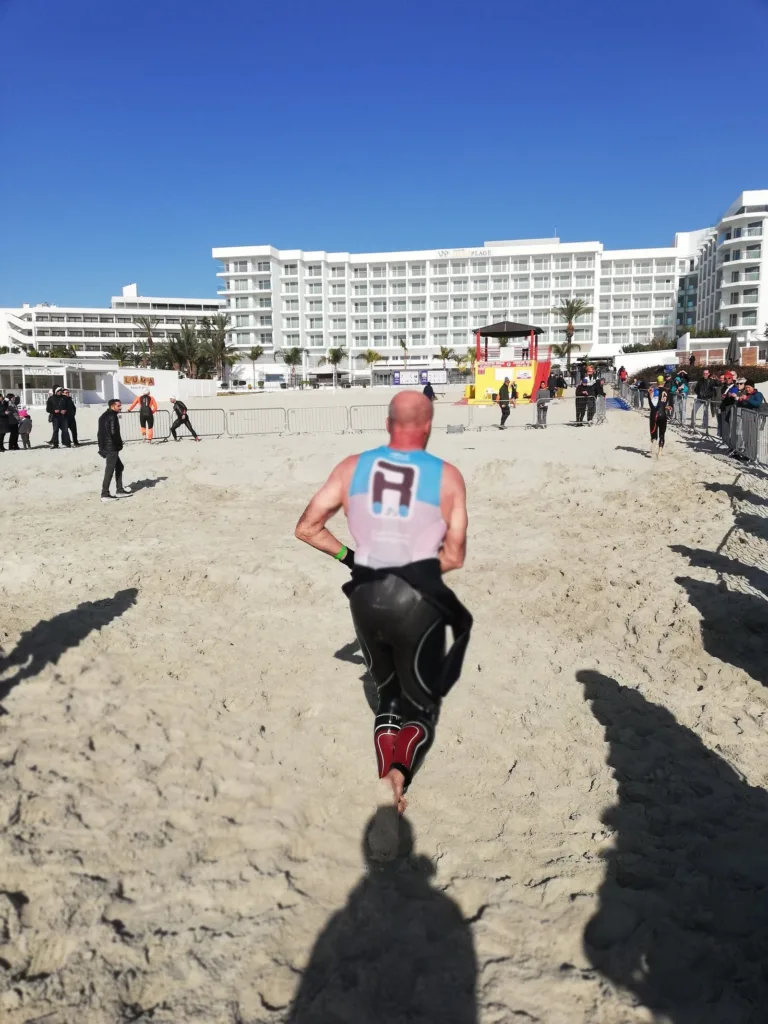
- Run to swim, repeatedly. Short run, straight into the water, swim, straight back out, run again. Do it four or five times in a session rather than once. This is the session that separates people who have trained for swimrun from people who have trained for a swim and a run.
- Swim in shoes. Early, and often enough that it stops being novel. Do it somewhere shallow the first time.
- Practise the exit. Standing up out of chest-deep water and running immediately is disorientating, and it is free to rehearse.
- Run on the surface you will race on. Coastal rock and path, not the seafront promenade.
- Do one session at close to the full distance. Not for fitness, but to find out what chafes, what falls off, and what you cannot eat while wet.
Why this coast suits it
The eastern corner is unusually well shaped for swimrun training, for the same reason it is well shaped for open water: a run of coastline with sheltered bays close together, so a run-swim-run session is a matter of walking out of the door rather than of driving between venues.
The coastal path around the headland between the two resort towns is the obvious training ground, and it doubles as the terrain for training outdoors on the Cape Greco coast. The sea itself is covered in swimming in the sea here. It is worth reading first if the swim is the half you are less sure about, which for most people entering a swimrun it is.
If the swim is the problem
It usually is, and it is the fixable half. Open-water confidence responds to structured exposure rather than to more running, and the specific skills (sighting, continuous swimming without a wall, breathing in chop) are coachable in a way that general fitness is not.
Swimming coaching here covers exactly that, in the pool for the technique and in the sea for the rest. If you are coming at it from the other direction and the swim is fine but the sport is new, triathlon coaching and swimrun preparation are close enough that the same block covers both.
And if this would be your first race of any kind, our guide to the races on this coast sets out what else is held within a short drive and, more usefully, the order most people should do them in.
Can I enter a swimrun on my own?
Depending on the event and the distance, usually yes: many swimruns run individual as well as paired categories, and the Cyprus event runs several formats including short and relay distances. Check the entry categories with the organiser rather than assuming either way.
Do I need a wetsuit?
That depends on the water temperature at the time of the event and on that event’s rules, both of which the organiser publishes. What is worth saying generally is that a wetsuit changes your stroke and your running, so if you are going to race in one, train in it, including the running part, which is the bit people forget.
How fit do I need to be?
For the shortest distances, about as fit as you would need to be for a comfortable long walk with some swimming in it, which puts it within reach of most people. For the long course, it is a serious endurance event and should be treated as one. The gap between the two ends of a swimrun entry list is wider than in most sports, which is part of the appeal.
Is it dangerous?
Organised events are safety-managed by the organiser, with the swims supervised. Training for it on your own is where the risk sits, and it is the ordinary open-water risk: do not swim alone, be visible, and swim parallel to the shore rather than out from it.