
25 years on the road, watching a cycling culture grow
After 25 years of cycling, I have learned that riding a bicycle is about much more than pedalling.
It is about awareness. It is about judgement. It is about understanding the environment around you and, perhaps most importantly, understanding the people you are sharing that environment with.
As a cycling/triathlon coach and someone involved in coaching and youth athlete development, I see many of the same principles on the road that I try to teach young athletes: responsibility, awareness, discipline, respect and the ability to make good decisions when things do not go exactly as planned.
Cycling simply puts those principles into a very different environment.
There are no sidelines. No referee. No controlled playing surface.
There is a road.
And the road belongs to all of us.
Watching cycling change in Cyprus
When I look back over the last 25 years, the change in cycling in Cyprus is remarkable.
Around 2012, I remember seeing what felt like a real cycling wave beginning to build. By around 2014, huge numbers of people were becoming involved in cycling in one form or another. By 2017, the cycling industry and community had developed into something considerably more established.
Since then, we have also seen improvements in roads, infrastructure and the general way cycling is accommodated.
Local authorities and the many people who have worked to improve conditions for cyclists deserve recognition for that progress. Having watched the development from the saddle for so many years, I genuinely take my hat off to those who have contributed to it.
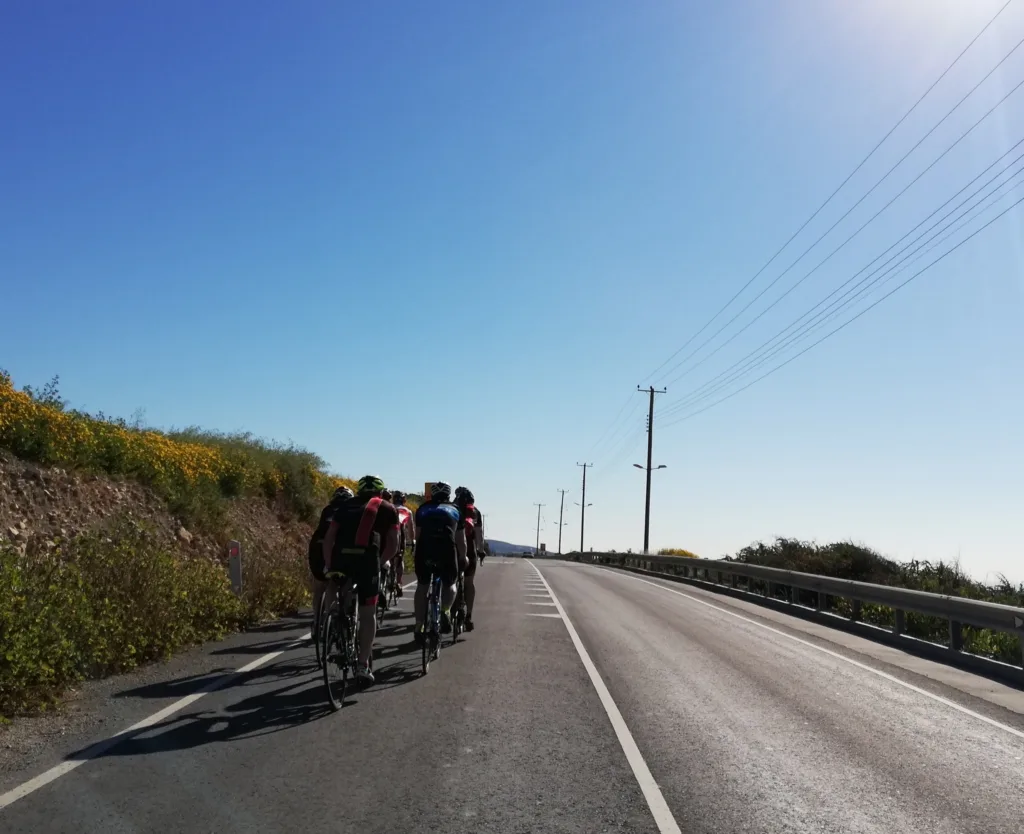
Cyprus has many of the ingredients needed to be a great cycling destination: mountains, coastline, countryside, challenging roads, beautiful scenery and a climate that allows cycling for much of the year.
It is attractive not only for recreational cyclists, but also for road cycling, mountain biking, commuting, touring, triathlon and competitive sport.
Cycling has become part of the island’s sporting and tourism identity.
But infrastructure alone cannot solve everything.
At some point, we have to talk about how we behave around one another.
The road is a shared environment
One of the biggest differences between cycling and many other sports is that cycling on the road takes place in an environment we do not control.
A football match takes place on a defined pitch. Swimming takes place in a pool. Tennis takes place on a court. Even in contact sports such as football or martial arts, the environment is controlled, and everyone understands the framework within which the activity takes place.
Road cycling is different.
On the same piece of road you can have cars, buses, taxis, motorcycles, scooters, delivery vehicles, tourists in rental cars, agricultural vehicles, pedestrians and other cyclists.
Everyone has somewhere to go.
A driver may be going to work. A taxi driver may have a passenger waiting. A bus may be carrying dozens of people. A delivery driver may be working against a schedule.
And the cyclist may be commuting, training for a triathlon, preparing for a race, exercising—or simply enjoying a ride.
These reasons may be very different, but that does not automatically make one person’s journey more legitimate than another’s.
We are all using the same public road.
That is the starting point.
The psychology of sharing the road
I understand why frustration can arise.
Imagine someone sitting behind the wheel of a bus carrying passengers, trying to get somewhere on time, and finding themselves travelling behind a cyclist. From inside the vehicle, it may be easy to think:
I’m working. Why is this person making me slow down?
The cyclist, meanwhile, may simply be doing exactly what the road allows them to do.
That difference in perspective is important.
Frustration is human. Aggression is a choice.
And once frustration becomes anger, a normal road interaction can become dangerous very quickly.
Cyclists are particularly exposed. A driver is surrounded by metal, with a seat, seatbelt and safety systems between them and the road. A cyclist has two wheels, a bicycle and their own body.
That does not mean the cyclist is automatically right and the driver is automatically wrong.
It means the consequences of a mistake can be dramatically different.
That is why awareness and patience matter so much.
A lesson I experienced first-hand
I have experienced this myself.
On one occasion, I was cycling along a relatively calm road when I came across a bus that had stopped on the left and was carrying passengers.
I began to overtake. As I was already halfway alongside the bus, the driver signalled that he was coming out.
But I was already there, occupying the space beside him.
The bus moved out, pushing me towards the middle of the two-way road. Fortunately, I had enough speed and experience to manage the situation and continue safely.
A little later, the driver came alongside me and gestured that I should be riding on a cycle path.
The situation became increasingly uncomfortable as the bus moved close to me and squeezed me towards the edge of the road.
A road hump eventually forced the bus to slow, allowing me to move ahead.
Later, at a tight section involving a corner and roundabout, the bus attempted to pass me again, leaving very little space.
I am not telling this story to criticise bus drivers as a group. That would be unfair and completely miss the point.
I am using it because it illustrates how quickly misunderstanding and frustration can develop between two legitimate road users.
I have been cycling for 25 years. I have learned to read traffic, anticipate vehicle movements and recognise when a driver has—or has not—seen me.
But an inexperienced cyclist should not need 25 years of experience simply to get home safely from a normal ride.
Road safety should not depend entirely on the more vulnerable road user knowing exactly how to react to every possible mistake.
It has to be a shared system.
“Why don’t you just use the cycle path?”
One of the questions cyclists hear regularly is:
“Why don’t you just use the cycle path?”
Sometimes that is a perfectly reasonable question.
But it is not always a complete one.
What type of cycling is taking place? What does the law permit? What is the infrastructure designed for? Where does the route go? What are the road and traffic conditions? Is the alternative genuinely suitable for the journey being made?
“I’m a cyclist too” does not necessarily mean we all experience cycling in the same way.
Someone who mainly rides recreationally on cycle paths has a very different experience from someone who spends hours training on public roads.
There are road cyclists, mountain bikers, commuters, touring cyclists, triathletes, competitive riders, families and recreational cyclists.
All are cyclists.
But the environments in which they ride can be very different.
The answer should therefore be based on safety, legality and the circumstances—not on the assumption that every cyclist should simply disappear from the road.
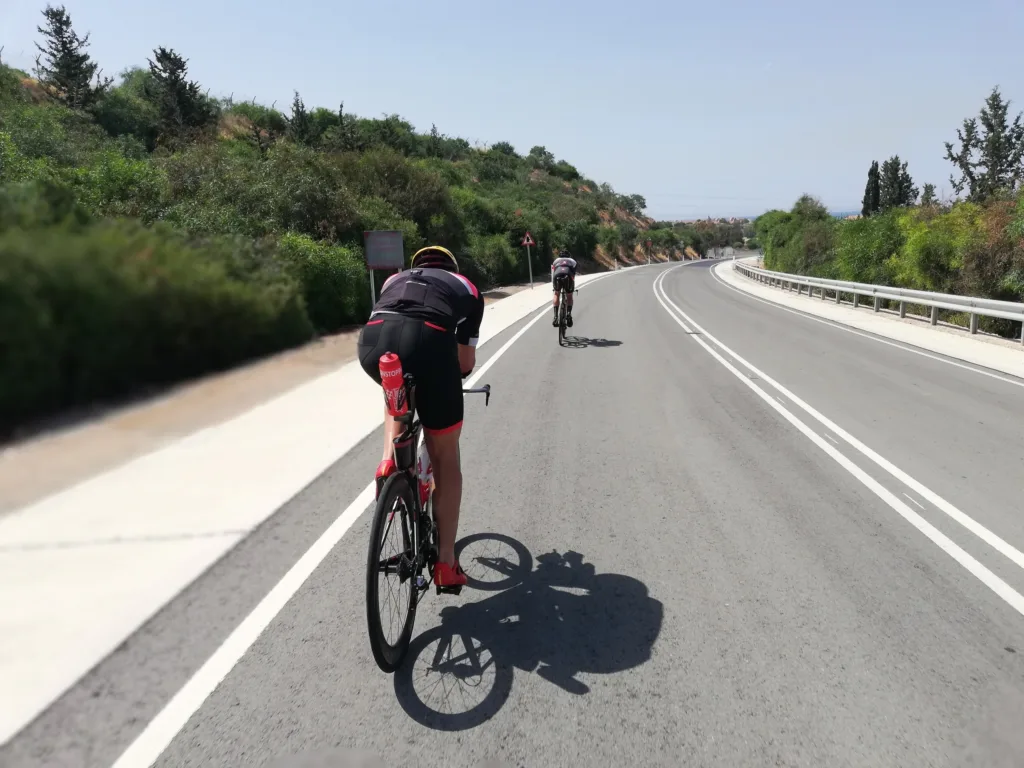
Cyclists have responsibilities too
This conversation cannot be one-sided.
Cyclists have responsibilities.
We must know and obey the road rules. We must ride predictably, remain aware of traffic, use appropriate equipment and make sensible decisions. We cannot use vulnerability as an excuse to ignore the rules.
Being on two wheels does not remove our responsibility to other road users.
But the opposite is also true.
A cyclist’s responsibility does not disappear simply because a driver is frustrated.
The bicycle is a legitimate form of transport and the cyclist is a legitimate road user.
That is the mindset we need.
Treat the cyclist as a legitimate road user.
See them. Anticipate them. Give them the appropriate space. Understand that their presence on the road is not automatically an inconvenience or an intrusion.
What I try to teach young athletes
Perhaps this is where my experience as a coach becomes particularly relevant.
When working with young athletes, I am not interested only in developing physical ability.
I want them to develop judgement.
To understand that being stronger does not give you the right to disregard others. That speed does not remove responsibility. That mistakes happen, but preparation and awareness can reduce their consequences.
Those lessons apply far beyond sport.
They apply to cycling. They apply to driving. And they apply to life.
Young athletes are also future drivers, parents, commuters, coaches, professionals and members of the community. The attitudes they develop today will eventually shape the way they behave around other people tomorrow.
If we want safer roads in the future, education cannot start and finish with road signs and regulations.
It has to include respect.
A small change in attitude
For cyclists, that might mean recognising when traffic is building and being patient.
For drivers, it might mean accepting that the cyclist ahead is not necessarily doing anything wrong.
For both, it means understanding that the road is not a personal space.
Nobody owns it.
We are borrowing the same space from one another for a few minutes at a time.
Sometimes the cyclist will need to slow down. Sometimes the driver will need to slow down. Sometimes someone has priority and the other person simply needs to wait.
That is not a battle.
That is sharing.
Personally, I often prefer to cycle early in the morning. There is generally less traffic, fewer work and school movements, cooler temperatures and less intense sun and heat. The roads can feel calmer, and the experience is often more enjoyable.
But that does not mean cycling at other times is automatically unsafe.
Conditions change with the route, season, traffic and weather.
The important thing is to understand the environment and make good decisions.
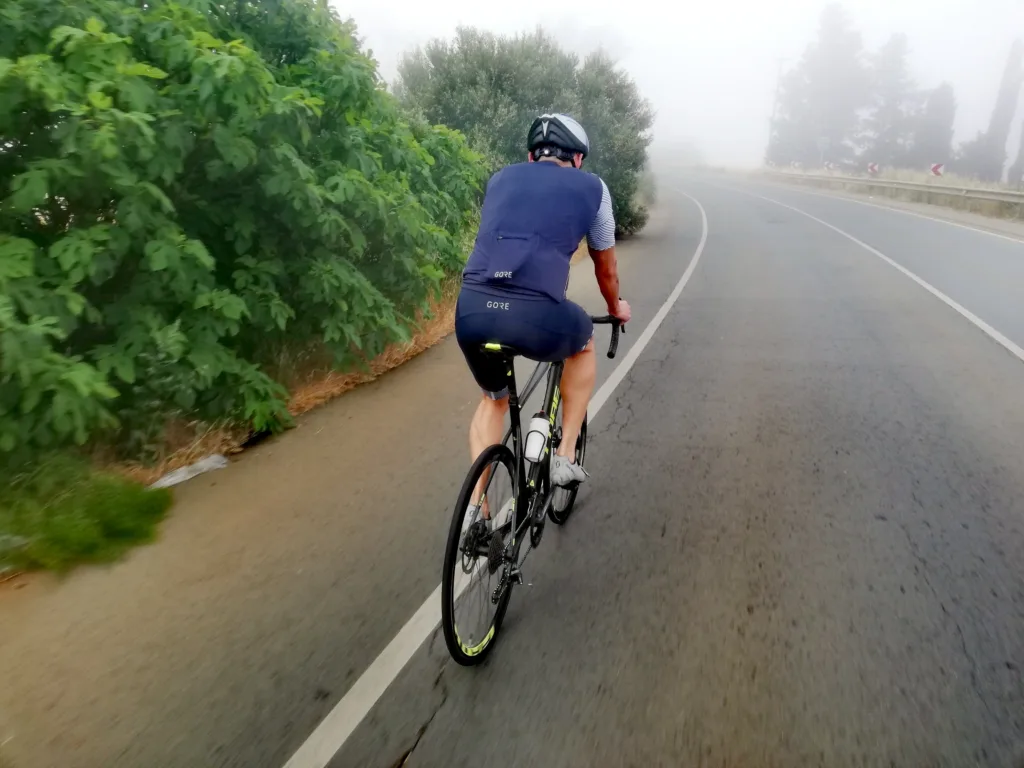
One road, shared responsibility
After 25 years on a bicycle, I have seen cycling in Cyprus grow from something relatively niche into a much more visible part of everyday life.
I have seen more people riding. I have seen the industry develop. I have seen infrastructure improve. And I have seen cycling become increasingly connected with sport, tourism, health and recreation.
That progress is worth protecting.
The next step is cultural.
We need cyclists who understand that sharing the road comes with responsibility.
We need drivers who understand that cyclists have a legitimate place on it.
And we need both sides to remember that the person in front of them is not an obstacle.
It is another human being.
A cyclist and a driver may be travelling for completely different reasons. One may be working. One may be training. One may be commuting. One may simply be enjoying the morning.
But they are both part of the same community.
We live here. We use the same roads. We contribute to the same society.
So when we meet on the road, perhaps the simplest approach is also the most important:
I see you. You see me.
If you have priority, I’ll respect it. If you need a moment, I’ll be patient. If I am ahead of you, give me the space I need.
Let’s get where we’re going safely.
Because the road does not belong to cyclists.
And it does not belong to drivers.
It belongs to all of us.
One road. Shared responsibility.