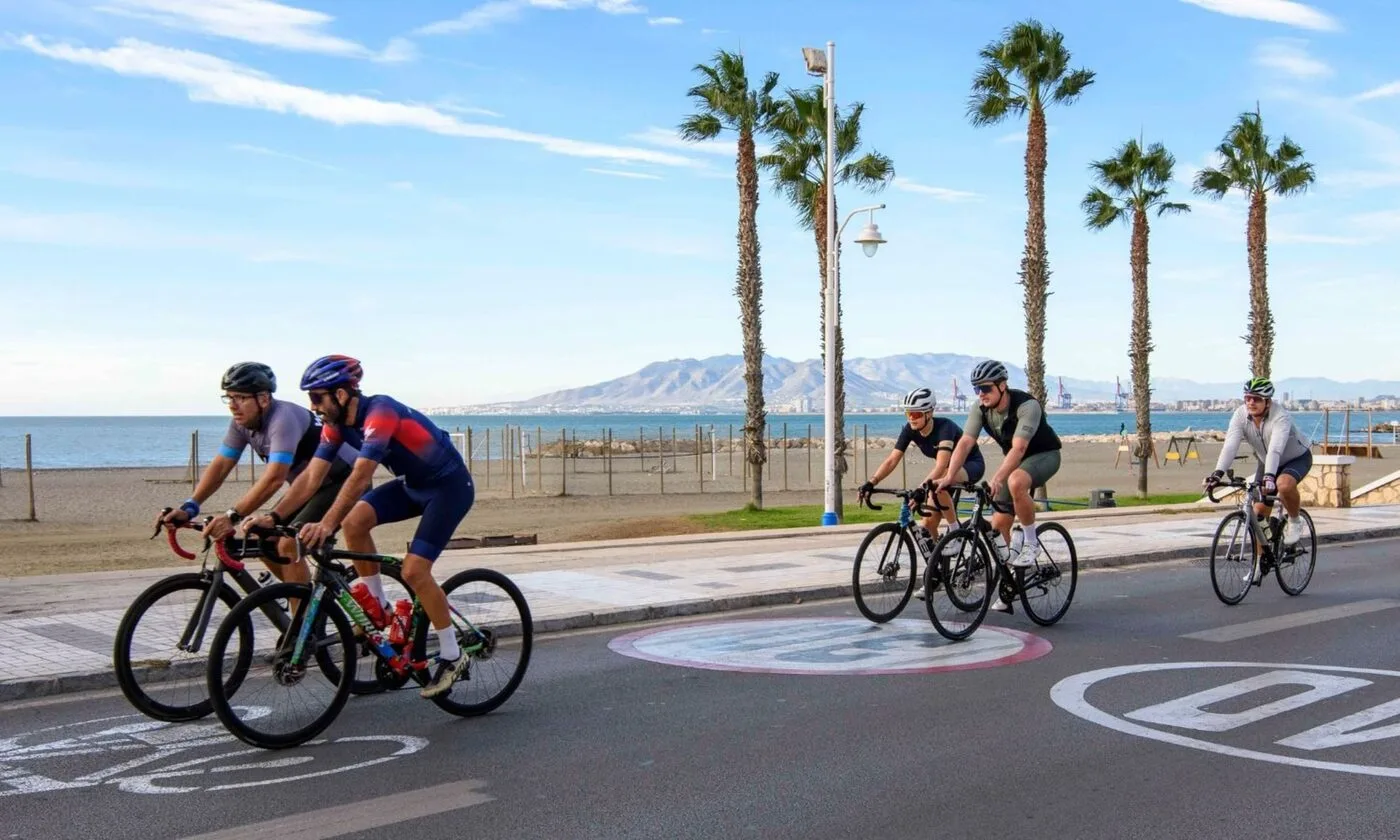
The eastern corner of Cyprus is the part of the island most visitors stay in and the part fewest of them ride. That is a shame, because it suits cycling well: the terrain is gentle, the villages are close together, and you are rarely more than a few kilometres from a coffee stop or the sea.
This is an overview of the kinds of riding available rather than a set of turn-by-turn routes. Roads change, signage changes, and a route sheet written once and never revisited is worse than none at all. You are better off with a general picture and a map on the bars. If you would rather start from something official and signposted, the Cyprus tourism authority publishes eight numbered routes through this region and we have listed all of them, with distances, in the eight official routes from Paralimni.
The lay of the land
Three distinct areas sit within easy reach of each other, and almost any ride here is some combination of them: the resort coastline from Protaras round to Ayia Napa, the farming villages a few kilometres inland, and the reservoir and open country behind those.
The whole area is compact. That is its great advantage for a holiday rider: you can turn for home at almost any point without a long slog back, which makes it forgiving if the heat, the wind or the legs turn out worse than expected.
The red-soil villages
Inland from the resorts sits a cluster of farming villages on distinctive red earth: Paralimni, Deryneia, Sotira, Liopetri, Avgorou, Frenaros. This is the classic easy ride of the area and the one to start with.
The roads between the villages are quiet, the distances short, and the landscape agricultural rather than touristic. It is a different Cyprus from the one most visitors see from a hotel, and that alone makes it worth a morning. Expect tractors and farm traffic rather than tour buses, and expect the road surface to vary more than it does on the coast.
It suits a social pace, a mixed-ability group, or a recovery day between harder efforts. It is also the friendliest introduction to riding on the left, because the junctions are quiet enough that a moment of hesitation costs nothing.
Village cafes are frequent, which changes how you plan. You do not need to carry a day’s food; you do need to be comfortable stopping.
Achna Dam and the wildlife reserve
The reservoir at Achna sits behind the villages and is a birdwatching site as well as a landmark to ride to. It makes a natural turning point for a morning loop: far enough out to feel like a ride, close enough that the return leg is not a commitment.
The tracks in the area open the same ride up to gravel and mountain bikes, so it is one of the few places here where the route works on more than one kind of bike. On a road bike, stay on the tarmac approaches; on anything with wider tyres, the surrounding tracks are worth exploring.
The coast between Protaras and Ayia Napa
The coastal stretch is the postcard ride, with the sea on one side for much of it and the eastern tip of the island at Cape Greco sitting between the two resorts. It is the ride visitors picture when they imagine cycling here, and it delivers.
It is best ridden early, for two separate reasons depending on the season. In summer that is a heat decision. In the shoulder seasons it is a traffic one: this is the busiest road in the region once the day gets going, and a route that is a pleasure at 07:00 is a different experience at 11:00. We have written up the Ayia Napa to Protaras ride on its own, because it is the ride most visitors here actually do.
Cape Greco itself is a national forest park and a walking destination as well as a riding one. On a road bike you are looking at the approach roads and the views; the trails across the headland are covered in our guide to mountain biking at Cape Greco.
Building a week out of it
- Easy day: a village loop inland, coffee stop halfway, back before lunch. Forty minutes to two hours depending on how many villages you link.
- Longer day: villages outbound, Achna Dam as the turn, coast road home. This is the area’s natural “proper ride”.
- Coastal spin: Protaras to Ayia Napa and back, early, before the traffic.
- Off-road day: the tracks behind Achna and the trails at Cape Greco.
- Big day: leave the east entirely and head for the mountains. See our guide to climbing in the Troodos.
Because everything is close together, these combine easily. A common pattern is a short coastal loop before breakfast and a village ride later, rather than one long outing.
The wind, and why it matters more than the hills
There is very little sustained climbing in this corner of the island, so the thing that actually determines how hard a ride feels is the wind off the sea. It can be strong, and it is often much more noticeable on the coastal stretch than inland.
Two practical consequences. First, if you are riding out and back along the coast, take the headwind on the way out. The temptation to enjoy a fast start is exactly how a pleasant ride becomes a grim one. Second, if the coast is unpleasant, the inland villages are frequently sheltered enough to be a completely different day. Having both options within a few kilometres of each other is one of the real advantages of being based here.
Practical notes
- Carry more water than the distance suggests. The gaps between shops are short but hot.
- Traffic drives on the left. Be deliberate at junctions for the first couple of days. More on riding safely on Cypriot roads.
- Start early in summer, and early in any season if you want the coast road quiet.
- Watch for grit and mud on the smaller inland roads after rain.
- Lights are worth having even on a daytime ride: a rear light in bright, low sun is not wasted.
We are based in this corner of the island, so this is the riding on our doorstep rather than something read off a map. If you want a bike delivered to your hotel rather than collected, bike rental in Cyprus covers Protaras, Ayia Napa and Larnaca. If you would rather ride it with someone who knows which turnings are worth taking, our guided cycling tours start here.
Is it suitable for a family or a mixed group?
The village routes are, provided everyone is comfortable on a road with occasional traffic. The compactness helps enormously: a slower rider can turn back without stranding themselves, and the group can regroup at a cafe rather than at the roadside.
The coast road is less suitable for children or nervous riders once the day gets busy. Early morning changes that completely.
What is the best time of day to ride here?
Early, in every season and for different reasons: heat in summer, traffic in spring and autumn, light and temperature in winter. Late afternoon is a reasonable second option in the cooler months, though the low sun on an east-facing coast is worth thinking about on the return leg.